Fear was the brand strategy
Blackbeard won most fights without firing a shot. The name, the look and the flag did the work. A branding lesson from the most feared pirate in the Caribbean.
May 29, 2022
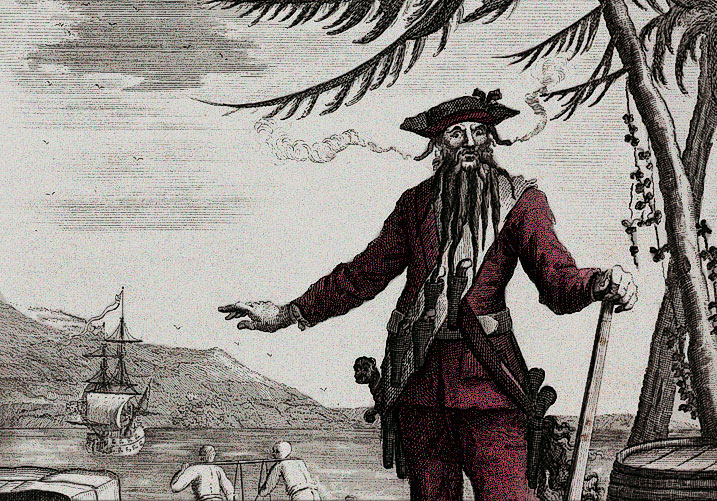
Have you ever heard the story of Edward Teach, better known as Blackbeard? He was the dreadnought of Caribbean piracy, ruling West Indian waters for years with his wits and fearlessness. He became a pirate after finding himself unemployed worlds away from home, and was killed in battle off the coast of North Carolina. His treasure has never been found, but his infamy has lived on for centuries. Blackbeard came to the new world and set the Atlantic coast on fire. So what can we learn from him? The power of branding.
It’s in the name
His tactics were both devious and intimidating. This man knew how to make an impression. It’s possible he got his famous nickname from his reputation alone. The more afraid people were, the less likely they were to fight back, so he rarely had to lose a crew member. Most ships gave up without trying. The name “Blackbeard” sounds barbaric, but if he had never existed and we heard it today, would it carry the same weight?
Let’s break that down. The beard has long been a sign of wisdom and gentility, but history also has its share of bearded villains: Ivan the Terrible, Rasputin, Genghis Khan. Black is the color of death, decay and gloom. It’s also read as luxurious, professional or powerful, depending on how it’s used. A sharp black suit, for example, signals authority. So in many Western cultures, black and a beard together read as a warning.

The pirate from hell
In business or pleasure, appearances matter. Blackbeard was a master of creating the right image to get what he wanted. His number one objective was to make his targets surrender without a fight, and it often worked. He dressed in black, wore a long beard, carried several pistols and tucked slow-burning fuses under his hat, so he arrived wreathed in smoke. The same idea shows up in his flag: a horned skeleton raising an hourglass in one hand and aiming a spear at a bleeding heart with the other. Your time is running out. Surrender, or else.

A vessel for a vision
Queen Anne’s Revenge was Blackbeard’s flagship, and it’s a perfect example of how a name can capture the imagination. It conjures a mighty vessel driven by a crew with a score to settle. It’s the perfect name for a pirate ship, and it’s easy to see why he chose it. A well-chosen name still does that work today. Whether you’re launching something new or rebranding something old, take the time to find the right one. It might make all the difference.
Edward Teach can teach
Blackbeard was a wicked man, but even history’s villains can teach us something about business. When the numbers aren’t adding up, look at your brand. A name, a look and a story people repeat can do more work than any sales pitch. That’s what we build at Kewl Method: brands that arrive before you do.